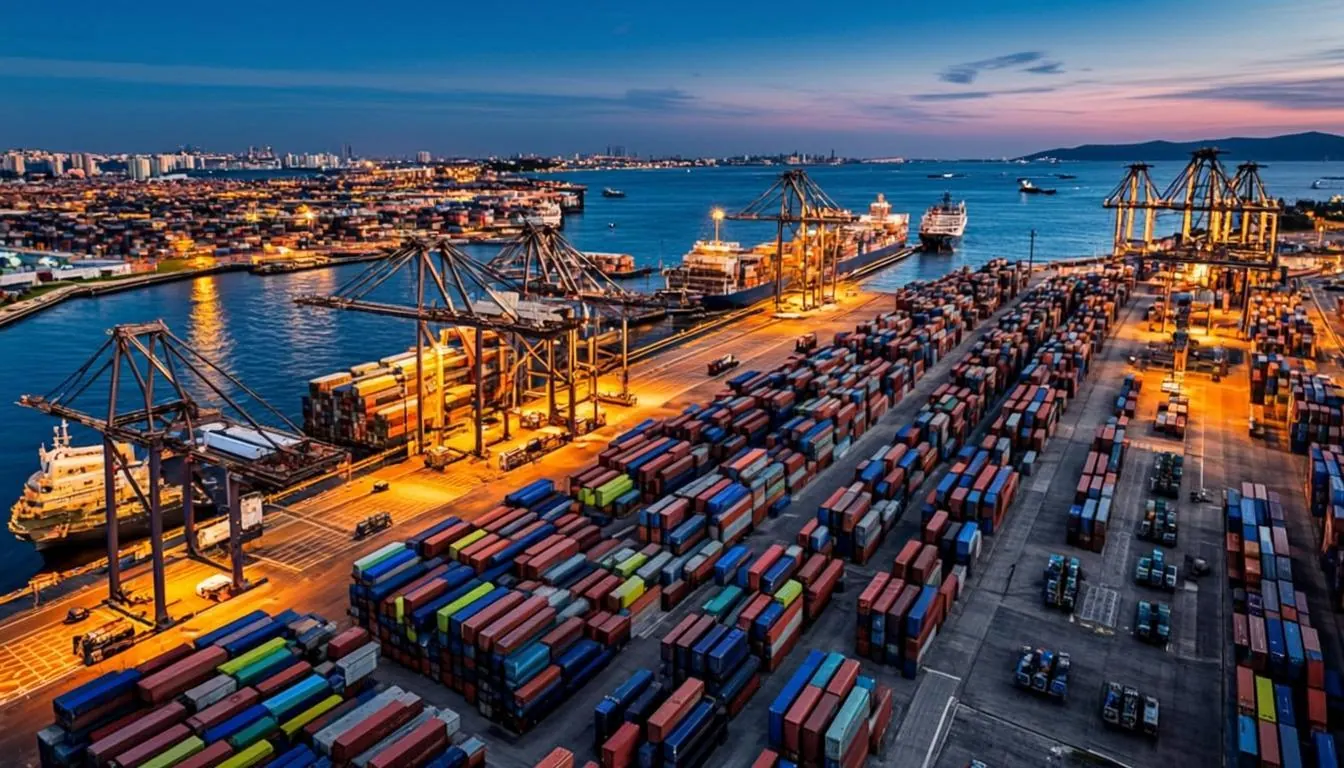
If you import food from India into the European Union, there is one regulation you need to be able to read: Commission Implementing Regulation (EU) 2019/1793 on the temporary increase of official controls and emergency measures governing the entry into the Union of certain goods from certain third countries. It is the instrument that decides whether your consignment sails through with a documentary check or arrives needing a certificate you should have arranged two months ago.
Most exporters and quite a few importers treat this as their freight forwarder's problem. It is not. The obligations under this regulation are split between the exporting country, the exporter and you as the operator responsible for the consignment, and the expensive failures happen in the gaps between them. This is how the mechanism actually works, article by article, with the numbers.
Where this sits in the wider framework
Regulation 2019/1793 does not stand alone. It operates inside the European Union's Official Controls Regulation, Regulation (EU) 2017/625, which establishes the border control post system, the Common Health Entry Document, and the TRACES system through which that document is lodged. 2019/1793 is the list: it names the products, origins and hazards that get extra attention, and the frequency of that attention.
For food and feed of non-animal origin, which covers essentially everything an Indian agricultural exporter ships, the entry document is the CHED-D. It is lodged in TRACES in advance of arrival, the competent authority at the border control post sees it, and the consignment is then subject to documentary checks always, and identity and physical checks at the frequency the regulation sets.
One useful exemption to know about. Article 1(3) of 2019/1793 excludes consignments of samples not exceeding 30 kg from the requirements of the regulation, along with certain other categories. If you are shipping a genuine trial sample, this is the provision that keeps it proportionate. It is not a route for commercial quantities split into 30 kg lots.
| Annex I | Annex II | |
|---|---|---|
| Legal basis | Article 5(1) of 2019/1793, temporary increase of official controls | Article 53(1)(b) of Regulation (EC) No 178/2002, emergency measures |
| What it means in practice | Higher frequency of identity and physical checks on arrival | Official certificate plus official sampling results, obtained in India before the goods sail |
| Work needed before shipment | CHED-D lodged in TRACES in advance, nothing else specific to this regulation | CHED-D, plus sampling and analysis by or under the supervision of the Indian competent authorities, plus an Annex IV certificate |
| Who has to act in the origin country | Nobody, beyond ordinary commercial documentation | The competent authority of the country of origin, which means lead time you have to schedule |
| Laboratory requirements | None imposed by this regulation | ISO/IEC 17025 accreditation for the specific method, under Article 10(5) |
| Marking of the consignment | No code required by this regulation | Identification code under Article 9, on every document, on the CHED and on each bag |
| Reach into blended products | Defined by the CN and TARIC codes of the entry | Extends to compound food through Table 2, generally where listed ingredients exceed 20% |
| The usual failure | A physical check finds a result over the limit | The certificate has expired on the laboratory-results clock, or the bags are unmarked |
Annex I: intensified official controls
Annex I is the lighter regime, and it is where a product usually lands first when a pattern of non-compliance starts showing up in the data. Under Article 5(1), consignments of the listed products from the listed origins are subject to an increased level of identity and physical checks at the border control post, at the frequency stated in the annex.
Article 5(2) requires the products to be identified by both their Combined Nomenclature code and their TARIC code, which matters because the scope of an entry is defined by those codes and not by the plain-language product description. If your product classifies outside the listed code, the entry does not catch you, and if it classifies inside, it does regardless of how you describe it commercially. Get your classification confirmed before you assume you are out of scope.
Article 6 contains a detail that repeatedly surprises people. The frequency stated in the annex is the overall frequency for all products falling under that entry, not a per-product or per-hazard frequency. So an entry covering several related products at 20% means one in five of the combined flow gets a physical check, allocated at the authority's discretion, not one in five of each product line.
To give a sense of the range of frequencies applied across origins and hazards, published entries have included groundnuts from Bolivia for aflatoxins at 50%, pistachios from Iran for aflatoxins at 50%, raspberries from Serbia for norovirus at 10%, and guar gum from India for pentachlorophenol and dioxins at 5%. The frequency reflects how bad the historical data is, not how sensitive the product is in the abstract.
Annex II: certificate plus sampling before shipment
Annex II is a different order of obligation, and it is applied under Article 53(1)(b) of Regulation (EC) No 178/2002, the general food law regulation, which is the emergency measures power. Products in Annex II cannot simply be presented at the border and checked. They need paperwork generated in India before the container sails.
Annex II is structured as two tables. Table 1 lists the food and feed of non-animal origin subject to the special conditions. Table 2 extends the reach to compound food, catching products containing a Table 1 ingredient above a stated proportion, generally more than 20%, either as a single listed product or as the sum of listed products. That second table exists because otherwise you could evade the regime by blending. If you make a spice mix, a snack coating or a bakery premix using a listed ingredient, check Table 2 before assuming you are outside the scope.
The identification code, and where it has to appear
Article 9 requires each consignment of Annex II product to be identified with a code, and that code has to appear on every document referred to in the regulation, on the CHED, and on each individual bag or other packaging unit in the consignment. Not on the container, not on the pallet, on each bag.
There is a derogation for consignments listed for mycotoxin hazards, where marking every unit is impractical for the way the product is handled, and in that case marking at a different level is permitted. Know whether your product falls under the derogation, because assuming it does when it does not means a physically non-compliant consignment sitting at the border while somebody works out whether 760 bags can be marked in a bonded warehouse.
Sampling and analysis in the country of origin
Article 10(1) requires that the consignment has been sampled and analysed in the country of origin by its competent authorities, or under their supervision, for the hazard the entry names. The results accompany the consignment. This is not a supplier self-declaration, it is an official act by the Indian authorities, and arranging it takes time you need to build into your shipping schedule.
Article 10(2) sets out specific analytical requirements for particular hazards, including analysis for pentachlorophenol at a level of 0.01 mg/kg and, where the hazard is Salmonella, the requirement that Salmonella be absent in 25 g. Article 10(5) requires the laboratory carrying out the analysis to be accredited to ISO/IEC 17025 for the method in question. Article 3 defines the sampling methods to be used, which is what stops the whole regime from resting on an unrepresentative grab sample.
The practical instruction for a buyer: ask to see the accreditation scope of the laboratory, not just its certificate. Accreditation is granted method by method, and a laboratory accredited for pesticide residues is not thereby accredited for mycotoxins.
The official certificate and its two expiry clocks
Article 11(1) requires each Annex II consignment to be accompanied by an official certificate conforming to the model in Annex IV of the regulation. It is issued by the competent authority of the country of origin, in a defined format, and it is the document the border control post will look for.
Article 11(2) is the provision that catches the most consignments, and it deserves reading slowly. The certificate is valid for four months from the date of issue, and in any event no more than six months from the date of the results of the laboratory analyses. Two clocks, and whichever expires first governs.
Work through a case. Suppose the laboratory results are dated 2 March. If the certificate is issued promptly on 10 March, the four month clock takes you to 10 July and the six month clock to 2 September, so the four month clock binds and 10 July is your deadline. Now suppose the material sat in the warehouse and the certificate was only issued on 25 July. The four month clock would run to 25 November, but the six month clock from the laboratory results expires on 2 September, so 2 September is your deadline. The certificate that looks like it has four months left actually has five weeks.
| Certificate issued | Four months from issue | Six months from lab results | Which one governs | Effective deadline |
|---|---|---|---|---|
| 10 March | 10 July | 2 September | Four months from issue | 10 July |
| 25 July | 25 November | 2 September | Six months from lab results | 2 September |
The consequence is operational rather than legal. If your supplier tests the lot, then holds it while you finalise the order, then obtains the certificate, then books space during a peak season with a rolled sailing, the arithmetic can quietly go against you mid-voyage. So put the laboratory analysis date on your document checklist alongside the certificate issue date, calculate both clocks yourself, and know your latest safe arrival date before the container is gated in. Do not delegate that calculation.
How a product gets listed, and how it gets off
Article 12 requires the Commission to review the lists in the annexes at regular intervals not exceeding six months, taking into account new information on non-compliance and risk. That information comes primarily from the Rapid Alert System for Food and Feed, the notifications lodged by member states when a consignment is rejected or a problem is found on the market, together with the results of the checks carried out under the regulation itself.
Three things follow. First, the regime is dynamic and roughly semi-annual, so the version of the annexes you checked eight months ago may not be the version that applies to your next shipment. Always read the current consolidated text. Second, a product improves its way off the list, or down from Annex II to Annex I, or down in frequency, through a run of clean results. Third, and this is the part exporters should sit with: every rejected container from an origin makes life harder for every other exporter from that origin. The listing is by country and product, not by company.
Article 8 handles the overlap case. Where a product appears in more than one entry, whether for different hazards or across the annexes, the highest applicable frequency of checks applies. There is no cherry-picking the softer entry.
What actually happens at the border control post
For a listed consignment, the sequence runs like this:
- You lodge the CHED-D in TRACES in advance of arrival, with the identification code and the certificate details entered, and attach the documentation.
- The consignment must be presented at a designated border control post, or a designated control point where one is permitted, and not just at any port. Route the container accordingly, because the vessel schedule and the available border control posts are a joint constraint.
- A documentary check is carried out on every consignment. The certificate, the laboratory results, the identification code and the CHED are checked against each other. Mismatched lot numbers between the certificate and the packing list fail here, and it is the most avoidable failure in the whole process.
- Identity and physical checks follow at the stated frequency. Identity means the consignment is what the paperwork says. Physical means sampling and analysis, and if your consignment is selected, the goods are held until results come back. Budget the time and the storage cost.
- On a compliant outcome the CHED is finalised and the consignment is released for the customs procedure. On a non-compliant outcome the authority orders official detention followed by destruction, special treatment, re-dispatch outside the Union, or use for another purpose, and the finding is notified through RASFF.
Two commercial notes on the physical check. You pay for the holding time, so agree with your supplier in advance who carries that cost if it happens, because it happens without anyone doing anything wrong. And a physical check is not a bad outcome. A clean physical check result is data that helps the origin move down the frequency ladder at the next review.
The failure modes we actually see
- Lot number mismatches. The certificate says one lot, the packing list says another, or the bags carry a third. Fixing this at the border is slow and sometimes impossible. Reconcile the numbers on a document set before the container is loaded.
- The identification code missing from individual bags. Marked on the container and the documents, absent on the units. Article 9 is explicit and it is checked.
- Certificate expiry by the six month clock. Covered above, and almost always a scheduling problem rather than a compliance problem.
- Laboratory not accredited for the specific method. The certificate of accreditation exists, the scope does not cover the hazard tested.
- Arrival at a port with no designated border control post for the product category. Discovered after the vessel is committed.
- Assuming the previous shipment's rules still apply. The annexes were amended in between.
- Compound food caught by Table 2. A blend containing more than 20% of a listed ingredient, shipped as though the blend were unlisted.
Every one of those is a paperwork and scheduling failure rather than a quality failure. The material was fine. That is what makes them worth eliminating: they are pure avoidable loss.
What to require from an Indian supplier
Reading the regulation yourself
We would rather you verified all of this than took our word for it. The regulation is public and free to read, and the consolidated version shows the annexes as currently amended. Because the annexes change roughly every six months, the consolidated text is the only version worth quoting in a contract. When you cite it, cite the consolidation date.
The two contaminant issues that put Indian products into these annexes most often are mycotoxins and pesticide residues. We cover the mycotoxin limits and the sampling that goes with them in aflatoxin limits in the EU, US and India, and the ethylene oxide problem that has driven sesame listings in understanding sesame quality. For the Indian side of the paperwork, the registrations and the per-shipment documents, see documents required to export food products from India.
How we work with EU buyers
We ship from Mundra and we deal with this regime as a matter of routine rather than as an exception. Before we quote an EU buyer, we check the current annexes for the product, tell you which regime applies, and give you the certificate lead time as a number rather than as a reassurance. We reconcile lot numbers across the document set as a standing practice, because the alternative is a container sitting at a border control post over a clerical error.
If you want to test that, send us a specification and a destination port and we will come back with the regime, the lead time and the price.