Count is the number of kernels in one ounce. That single sentence resolves most of the confusion in a peanut enquiry. A 40/50 count peanut has 40 to 50 kernels per ounce and is therefore a large kernel. A 70/80 count peanut has nearly twice as many kernels in the same weight and is therefore a small one. The number goes up as the peanut gets smaller, which is counterintuitive the first time you meet it and obvious afterwards.
Java, Bold and TJ are a separate axis entirely. They are plant types, closer to a grape variety than to a grade. A lot can be Java 50/60 or Bold 50/60, the same count on paper, and give you two different products in a roaster. Buyers who treat the type name as a quality tier tend to over-specify size and under-specify the things that actually decide performance.
Count is kernels per ounce, and the arithmetic is worth doing once
One ounce is 28.35 g. Divide that by the count and you have the average kernel weight, which is the number you can verify yourself with a bench scale and a sample.
| Count | Average kernel weight | Kernels per kg | Typical use |
|---|---|---|---|
| 38/42 | 0.68 to 0.75 g | about 1,400 | Large table nut, in-shell equivalent |
| 40/50 | 0.57 to 0.71 g | about 1,600 | Table nuts, coated and salted snacks |
| 50/60 | 0.47 to 0.57 g | about 1,950 | General snack, roasting, blanching |
| 60/70 | 0.41 to 0.47 g | about 2,300 | Peanut butter, confectionery pieces |
| 70/80 | 0.35 to 0.41 g | about 2,700 | Crushing, paste, chopped inclusions |
| 80/90 | 0.32 to 0.35 g | about 3,000 | Oil crushing, bird feed grades |
Two things follow from the arithmetic. First, the difference between adjacent counts is small in absolute terms, roughly a tenth of a gram between 50/60 and 60/70, so a lot sitting on the boundary can honestly be described either way and you need a tolerance clause rather than a single number. Second, count is a range, not a target, and a supplier quoting a single figure such as "50 count" is telling you less than one quoting 50/60 with a stated tolerance.
To check a lot yourself, weigh out exactly 28.35 g from a representative sample and count the kernels. Do it five times from different parts of the sample and take the mean. If the five counts scatter widely, you have a uniformity problem regardless of what the mean says, and uniformity is the thing a roaster actually cares about because it decides whether the batch cooks evenly.
Java, Bold and TJ are plant types, not quality tiers
| Trade name | Botanical type | Kernel shape | Usual counts | Oil content | Where it goes |
|---|---|---|---|---|---|
| Java | Spanish bunch | Small, round to oval | 50/60 to 80/90 | Higher | Crushing, confectionery, chikki, coated snacks |
| Bold | Virginia runner | Larger, oblong | 38/42 to 60/70 | Lower | Table nuts, in-shell, roasted and salted |
| TJ | Java selection | Round, very uniform | 50/60 to 70/80 | Higher | Blanching, paste, bakery inclusions |
| Red skin | Spanish type with pigmented testa | Small, round | 60/70 to 80/90 | Higher | Skin-on snacks, boiled and spiced products |
The practical distinctions are these. Java types carry more oil, which is why they crush better and why they brown faster in a fryer. Bold types are larger and hold their shape, which is why they dominate table and in-shell packs. TJ is a Java selection prized for uniformity, which matters most when the kernel is being blanched, because a blanching line strips skins by rubbing and an uneven kernel size means uneven skin removal.
Origin follows type. Gujarat, Rajasthan and parts of Andhra Pradesh supply most of the Bold volume. Java and TJ come largely out of Gujarat and Karnataka. If your specification names both a type and an origin, you have narrowed the supply base considerably, so ask whether that narrowing is buying you anything or just shrinking the number of people who can quote.
HPS, and what hand picked selected means now
HPS stands for hand picked selected, and it dates from a period when the final sort on an export lot really was done by hand at a table. On a current export line it is not, and that is an improvement rather than a compromise. A gravity separator removes immature and shrivelled kernels by density better than an eye can. A colour sorter removes discoloured, mouldy and dark kernels at a rate no manual sort can approach, and the same pass takes out most of the foreign material.
So treat HPS as a commercial grade description meaning cleaned and sorted to export standard, and then ask the specific question: what does the cleaning line consist of, and is there an optical sort in it. For a lot that has to meet a tight aflatoxin limit, the presence of a colour sorter is one of the most useful pieces of information you can get, because discoloured kernels and high-toxin kernels correlate.
The specification, line by line
| Parameter | Typical export figure | Why it matters |
|---|---|---|
| Moisture | 7% to 8% maximum | Available water drives mould growth in transit. This is the single most important line. |
| Admixture | 1% to 2% maximum | Kernels of other varieties or sizes. Affects uniformity in the roaster. |
| Foreign matter | 0.1% to 0.5% maximum | Stones, husk, dust. A cleaning-line output measure. |
| Splits and broken | 2% to 5% maximum | Broken kernels oxidise faster and cook differently. |
| Damaged and discoloured | 1% to 2% maximum | Correlates with mould history and with toxin risk. |
| Oil content | 44% to 50% | Decides browning behaviour and crushing yield. |
| Free fatty acid | 1% maximum on oil basis | Rises with poor storage. A staleness indicator. |
| Aflatoxin | By destination | See below. This is a market-access parameter, not a quality preference. |
Moisture deserves the emphasis. Groundnuts are harvested from the soil, dried in the field and then stored, and every one of those steps is an opportunity for the kernel to pick up water and for fungi to establish. A lot arriving at 9 percent moisture instead of 7 percent has not simply given you extra water weight. It has given you a growth substrate for the twenty-day sea leg. This is why moisture is checked at load rather than only at origin dispatch, and why the container loading guide treats lining and ventilation as part of the specification rather than as packing detail.
Aflatoxin decides which market a lot can enter
Size and cleanliness are commercial questions. Aflatoxin is a legal one, and it is the reason groundnut consignments get stopped.
The structural point is that the European Union sets different maximum levels depending on whether the groundnuts are intended for direct human consumption or are going for sorting or other physical treatment before consumption, with the tighter figure applying to the direct-consumption case. The distinction is written into the contract and onto the label, so a lot bought against the processing limit cannot be diverted to a retail pack after arrival. The current figures and the product categories they attach to are in Regulation (EU) 2023/915, and because the annexes are amended periodically the consolidated version is the one to read.
Separately, groundnuts from India are subject to increased official controls at EU border control posts, which means a defined percentage of consignments are sampled and held pending results. The mechanism, the two clocks on the official certificate and the practical consequences for your delivery schedule are set out in the article on how EU border controls work for Indian food imports, and the numbers themselves are in Regulation (EU) 2019/1793.
The sampling behaviour is the part buyers underestimate. Aflatoxin is not distributed evenly through a lot, it concentrates in a very small number of kernels, so a result depends heavily on how the sample was drawn. The article on aflatoxin limits in the EU, US and India works through why a large aggregate sample and a proper grinding step matter more than the laboratory's method, and why two honest tests on the same container can disagree.
In-shell groundnuts change the arithmetic
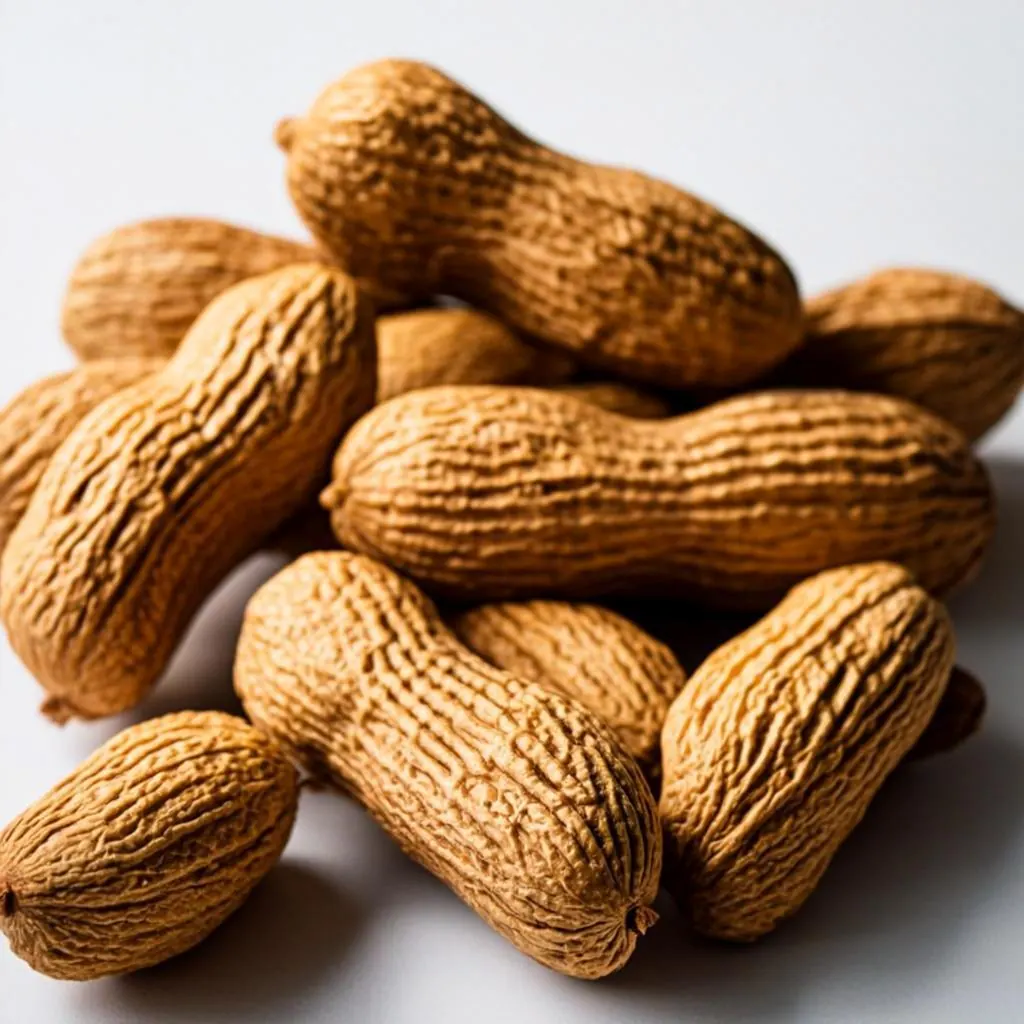
In-shell groundnuts are graded on pod count per ounce or on pod size in millimetres rather than on kernel count, and the two are not interchangeable. Shelling percentage, the kernel weight recovered from a given pod weight, typically runs in the high sixties to low seventies for Bold types, so a tonne of in-shell yields well under a tonne of kernels.
The freight consequence is larger than the yield consequence. In-shell product is bulky and light, so a container fills on volume long before it fills on weight. If you are comparing a kernel price against an in-shell price, convert both to a landed cost per kilogram of edible kernel including freight, or the comparison is meaningless. The break-even density arithmetic in the container loading guide is the tool for that.
Blanched, red skin and split kernels
Blanched kernels have the skin removed, which changes appearance, shelf life and the specification you should be writing. That is a subject of its own, covered in the blanched peanut specification guide.
Red skin kernels keep a pigmented testa and are bought for exactly that. Specify the skin colour intensity you expect and, more importantly, specify the split tolerance, because skin-on lots hide splits less well than blanched lots reveal them.
Splits are sold deliberately as well as arising as a defect. A split kernel grade destined for paste or for chopped inclusions is a legitimate and cheaper input, and buying whole kernels to grind them is the second most common overspend in this category after over-specifying count.
Crop calendar and what it means for your order book
India harvests groundnut in two windows. The kharif crop, sown with the monsoon and harvested from around October through December, is the large one and sets the year's price direction. The summer crop, harvested around March through May, is smaller and is usually the better-controlled crop because it is grown under irrigation rather than under rainfall.
Two practical consequences. First, quality is not uniform across the year, and a lot bought in September is the tail of the previous kharif crop with eleven months of storage behind it. Ask for the crop year on the certificate of analysis and treat its absence as a question rather than an oversight. Second, if a monsoon has been erratic, the aflatoxin risk in that kharif crop rises across the whole origin, not just at one supplier, and the sensible response is a tighter pre-shipment sampling plan rather than a change of supplier.
Packing and loading
| Pack | Common sizes | Notes |
|---|---|---|
| PP woven bag | 25 kg, 50 kg | Standard for bulk kernels. Specify laminated or unlaminated. |
| Jute bag | 25 kg, 50 kg | Breathable. Required by some destinations, and needs a food-grade oil declaration. |
| Vacuum pack | 25 kg, 30 kg | For blanched and high-value counts. Extends shelf life materially. |
| Carton | 10 kg, 12.5 kg | Retail-adjacent and in-shell packs. |
A 20ft container of kernels in 50 kg bags typically loads in the mid twenties of tonnes, so weight is the binding constraint rather than volume. For in-shell it is the reverse. Either way, kraft paper lining and desiccant are worth the cost on a groundnut container, because condensation on the roof of a steel box in a tropical transit is the mechanism by which an in-specification lot arrives out of specification.
How we supply it
We ship bold peanuts, java peanuts, blanched peanuts, red skin peanuts, peanut kernels and groundnuts in shell against a named count range and a written tolerance rather than against a grade name alone. Certificates of analysis carry the crop year and the moisture figure at load, and pre-shipment aflatoxin sampling follows the destination's own sampling rules rather than a convenient shortcut, because a result drawn from too small a sample protects nobody.
If you tell us the end use rather than the count, we will usually come back with a cheaper count that performs identically.