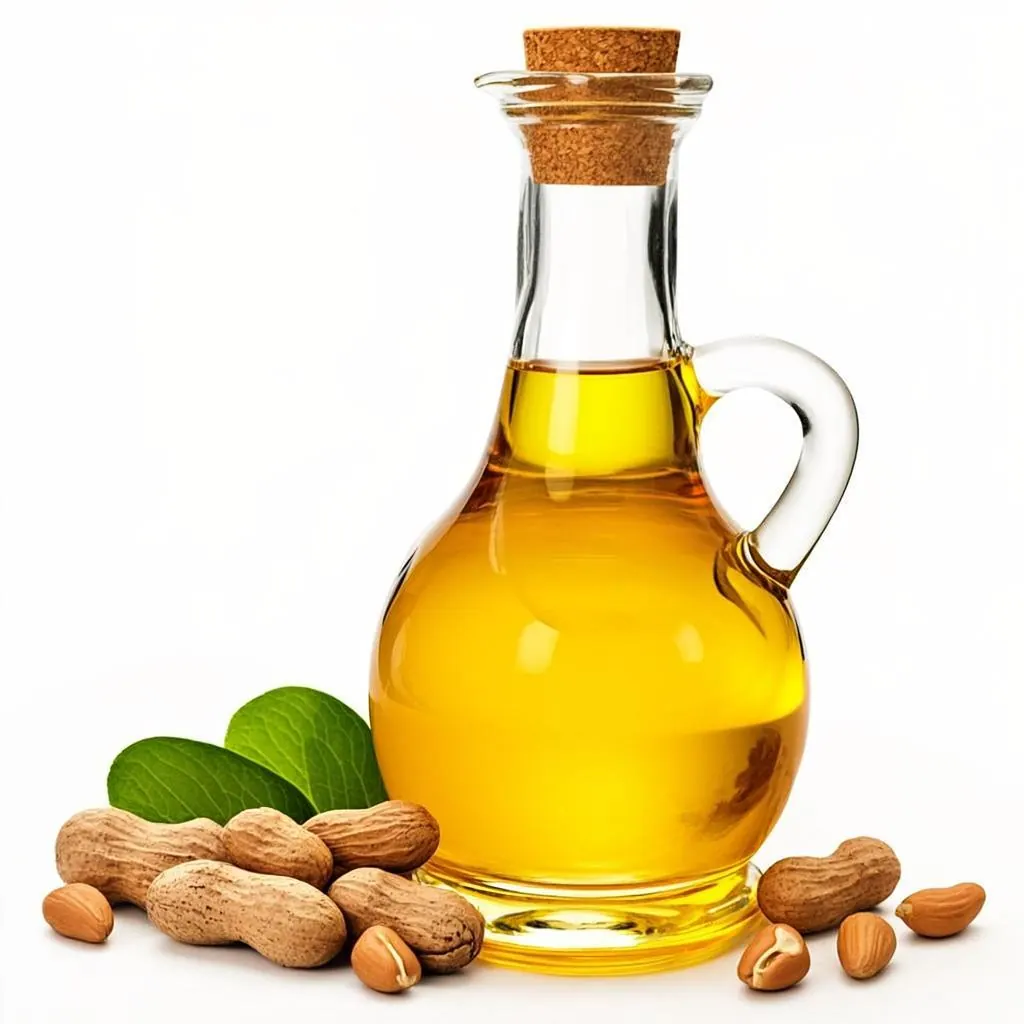
Refined, filtered and cold pressed are not three products. They are one product at three points on a processing continuum, and every difference in colour, aroma, smoke point, shelf life and price follows from where on that continuum the oil stopped.
Cold pressed oil is expelled from the seed without added heat and then only settled or lightly filtered. Filtered oil is expeller pressed, usually with the seed conditioned warm, then mechanically clarified. Refined oil has additionally been through neutralisation, bleaching and deodorisation, which strip free fatty acids, lighten colour and remove volatile aroma compounds. Understand that sequence and the specification for each grade becomes predictable rather than something to memorise.
What each processing step actually removes
| Step | What it removes | What it costs you |
|---|---|---|
| Expelling and settling | Solids, some phospholipids | Yield, because mechanical pressing leaves oil in the cake |
| Filtration | Fine suspended solids, residual moisture | Very little. This is clarification, not refining |
| Degumming | Phospholipids and gums | Some minor components |
| Neutralisation | Free fatty acids, and most aflatoxin | Some oil as soapstock |
| Bleaching | Colour pigments, trace metals, peroxides | Carotenoids and some tocopherols |
| Deodorisation | Volatile aroma and flavour compounds | The characteristic groundnut aroma, and more tocopherols |
The last two rows are the whole argument between refined and unrefined. Deodorisation is why refined groundnut oil tastes of nothing, which is precisely why a caterer frying samosas wants it and precisely why a buyer supplying a market that cooks with groundnut oil for its flavour does not.
The three grades side by side
| Parameter | Cold pressed | Filtered | Refined |
|---|---|---|---|
| Colour | Deep golden to amber | Golden | Pale yellow, near water-clear |
| Aroma and taste | Pronounced, nutty, roasted notes | Present, milder | Effectively neutral |
| Free fatty acid | Higher, never stripped | Higher, never stripped | Very low, typically around 0.1% max |
| Peroxide value | Contract it. Rises fast | Contract it | Low at dispatch |
| Smoke point | Lowest | Low to moderate | Highest |
| Shelf life | Shortest | Short to moderate | Longest |
| Aflatoxin risk | Highest, seed-dependent | High, seed-dependent | Lowest, refining removes most |
| Bought for | Flavour, artisanal and traditional positioning | Cost with some character retained | Frying, blending, industrial use |
Free fatty acid is the parameter that separates the grades
Free fatty acid, reported as a percentage and usually expressed as oleic acid, is the fraction of the oil that has hydrolysed off the glycerol backbone. It rises with poor seed, with damaged seed, with delay between crushing and packing, and with bad storage.
For refined oil it is low because neutralisation removed it, and a refined oil arriving well above its contracted figure is telling you about a refining shortcut or about post-refining storage, not about the seed. For filtered and cold pressed oil the free fatty acid is inherited from the seed and never stripped, so it is a direct readout of seed quality and handling speed. That makes it a much more informative number in the unrefined grades than in the refined one.
Peroxide value is the complement. Free fatty acid measures hydrolysis, peroxide value measures oxidation, and only the second one tells you whether the oil has been sitting warm in a lit tank. Ask for both on every certificate of analysis and record them at dispatch, because the pair at dispatch is the only baseline against which an arrival result means anything.
Reading a groundnut oil certificate of analysis
| Line | What it tells you |
|---|---|
| Free fatty acid, as oleic | Hydrolysis. Grade-defining in refined oil, seed-quality-defining in unrefined |
| Peroxide value, meq O2 per kg | Oxidation already suffered. The rancidity forecast |
| Moisture and volatile matter | Water carried in the oil. Drives hydrolysis in storage |
| Insoluble impurities | Solids not removed by filtration. A clarification measure |
| Iodine value | Degree of unsaturation. Also a crude authenticity check against the expected range for groundnut oil |
| Saponification value | Average fatty acid chain length. Used with iodine value for identity |
| Unsaponifiable matter | Non-fat material. High figures suggest contamination or adulteration |
| Colour, Lovibond or similar | Bleaching effectiveness in refined oil, and grade identity in unrefined |
| Refractive index | A fast identity check at the tank side |
| Aflatoxin | Carried from the seed. Ask for it on the oil, not just the seed lot |
| Allergen statement | Groundnut is a declared allergen in most major markets |
The identity group, iodine value with saponification value and refractive index, deserves a note. Groundnut oil sits in a defined range for each of these, and adulteration with a cheaper oil moves them. They are not a proof of authenticity on their own, and fatty acid composition by gas chromatography is the real tool, but a lot whose iodine value sits outside the expected band for groundnut oil is a lot worth a proper composition test before it is accepted. The internationally recognised ranges for named vegetable oils are published in the Codex standard for named vegetable oils, listed in the Codex commodity standards index.
Aflatoxin in oil is a real issue, and refining is the reason it varies by grade
Aflatoxin is fat soluble, so when contaminated seed is pressed the toxin partitions into the oil rather than staying behind in the cake. That makes seed provenance a direct oil-safety question rather than an upstream concern.
Alkali refining removes most aflatoxin, which is a genuine safety advantage of the refined grade and the reason refined oil sits at the bottom of the risk table above. Cold pressed and filtered oils have had no such step, so their control is entirely at the seed: sound, dry, properly stored groundnut with a documented aflatoxin result. That is why we treat cold pressed and filtered orders as seed-selection decisions first and pressing decisions second.
Two practical requirements follow. Ask for the aflatoxin result on the oil itself, because a seed lot result does not account for what the pressing step concentrated. And where a destination sets a maximum level for aflatoxin in oil, name it in the contract with the regulation, rather than relying on a general assurance. Current European maximum levels are in Regulation (EU) 2023/915, and the sampling mechanics that decide whether a result is meaningful are covered in the aflatoxin article.
The allergen point, which is not optional
Groundnut is one of the most consistently regulated food allergens in the world, and groundnut oil carries the declaration. Two things follow for a buyer.
First, labelling. Whatever your market's rules are, the oil has to be declared, and a refined oil is not exempt simply because the protein content is low. Confirm the position in your own jurisdiction before you build a label.
Second, cross-contact in the other direction. If you are buying groundnut oil into a plant that also handles allergen-free lines, the oil is now an allergen input in your own hazard analysis. And if you are buying any other oil from a supplier who also presses groundnut, the questions run the other way: shared expellers, shared tanks, shared road tankers and shared flexitanks all matter. Ask for the segregation and the cleaning validation, in writing.
Packing and shipping
| Format | Capacity | Notes |
|---|---|---|
| Flexitank in a 20ft container | About 20,000 to 24,000 litres | Lowest cost per litre for bulk. Single use. Confirm food-grade liner certification |
| ISO tank | About 21,000 to 26,000 litres | Reusable, heatable, and cleaning history is documentable. Higher freight |
| Steel drum | 200 litres, about 180 kg net | Robust, simple, and easy to reject a single unit on arrival |
| Jerry can, HDPE | 5, 15, 20 litres | Retail and food service. High packaging cost share |
| PET bottle | 500 ml to 5 litres | Retail. Specify the resin and whether UV protection is included |
Two shipping details do most of the damage when overlooked. Light and heat drive oxidation, so a clear PET bottle stored in a sunlit warehouse will develop peroxide value that no dispatch specification can prevent, and the fix is packaging choice rather than a tighter contract. And for bulk, the previous cargo history of an ISO tank or the food-grade certification of a flexitank liner is the document to demand before loading rather than after arrival.
The container arithmetic for liquids is unlike the arithmetic for bagged commodities, because a full flexitank hits the container's payload limit well before its volume limit. The break-even reasoning in the container loading guide explains why, and the castor oil specification guide covers the same packing questions for a non-edible oil where the tank cleanliness rules are different again.
How we supply it
We ship refined groundnut oil, filtered groundnut oil and cold pressed groundnut oil with free fatty acid, peroxide value and the identity parameters on every certificate of analysis, and with the aflatoxin result run on the oil rather than inferred from the seed lot. Because we also handle the seed side, in bold and java grades, the provenance behind a cold pressed or filtered lot is something we can document rather than something we have to ask a third party about.
If you are buying for frying, we will point you at refined even where the unrefined grade carries a better margin, because a fryer is the wrong place to pay for aroma.