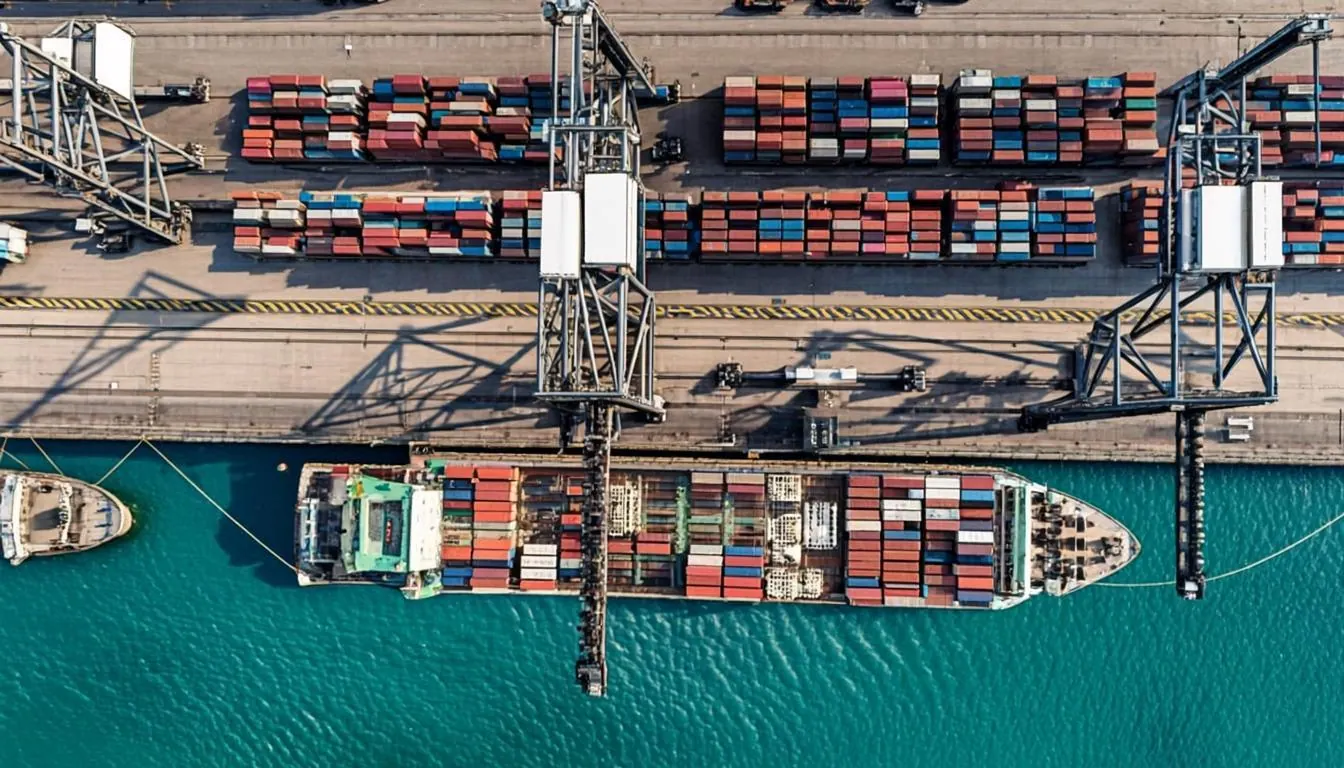
The United States regulates imported food primarily through the importer rather than through the border. That is the structural difference from the European system, and it changes what an exporter has to do. There is no equivalent of a border control post holding your consignment while an official certificate is checked. Instead, a US business has a legal obligation to have verified you before your food arrives, and the consequences of an inadequate programme land on them.
Which sounds like it is not your problem, and is exactly why so many Indian exporters get caught out. The importer's programme runs almost entirely on evidence that only you can produce. If you cannot produce it in the form the regulation requires, you become an expensive supplier to keep, regardless of how good your product is.
Three separate obligations, often confused
| Obligation | Who it sits with | What it is |
|---|---|---|
| Food facility registration | The Indian facility | Registration with FDA, renewed periodically, with a designated US agent |
| Prior notice | The filer, usually the customs broker | An electronic notice before the shipment arrives, within defined timing windows |
| Foreign Supplier Verification Program | The FSVP importer, a US person | A documented programme evaluating and verifying you as a supplier |
These are three different requirements with three different owners, and satisfying one does nothing for the others. A registered facility with a perfect FSVP file still has its container held if prior notice was filed late. An importer with flawless prior notice still faces an FSVP finding if they cannot produce your hazard analysis.
Who the FSVP importer is, and why it is not you
The FSVP importer is the US owner or consignee of the food at the time of entry. Where no US owner or consignee exists, 21 CFR 1.509(b) requires the foreign owner or consignee to name, before importation, a US agent or representative to act as the importer for FSVP purposes.
So the exporter is never the FSVP importer. Two things follow.
First, if you sell on terms where there is no US buyer of record at entry, someone has to be appointed, and it will not appoint itself. Sorting that out before the vessel sails is considerably cheaper than sorting it out with a container on the ground.
Second, the identification requirement is concrete and it is an entry-level requirement. Under 21 CFR 1.509(a), for each line entry of food offered for import, the FSVP importer's name, electronic mail address, and unique facility identifier recognised as acceptable by FDA must be provided electronically when filing entry with US Customs and Border Protection. A missing or incorrect identifier is not an administrative tidy-up, it is a defect in the entry filing.
Prior notice, and the timing that actually matters
Prior notice is the requirement that gets shipments held most often, because it has hard clocks on both sides. Under 21 CFR 1.279:
| Mode of arrival | Minimum notice before arrival |
|---|---|
| Land by road | 2 hours |
| Land by rail | 4 hours |
| Air | 4 hours |
| Water | 8 hours |
And on the other side, prior notice may not be submitted more than 30 calendar days before the anticipated arrival date through the ABI/ACE system, or more than 15 calendar days in advance through FDA's own prior notice submission interface. For goods sent by international mail the notice has to go in before the item is dispatched toward the United States.
Two practical points that follow from reading that carefully.
The clock starts at confirmation, not at submission. A notice submitted 8 hours and 5 minutes before a vessel arrives and confirmed 20 minutes later has not met the water requirement. Build margin.
And the 30 day ceiling is a real constraint on long ocean legs from India. A voyage of five or six weeks means the notice cannot be filed at the time of shipment, so it has to be filed en route, which means somebody has to be tracking the vessel and holding the data ready. That is a scheduling discipline rather than a document, and it is where the failure usually is.
The information required in a prior notice includes the manufacturer, the shipper, the grower where known, the country of production, the FDA product code, the registration number of the facility, and the anticipated arrival details. Almost all of that comes from you. The filer is usually the customs broker, and the broker can only file what you have supplied, accurately and in time.
Facility registration, and the lapse that stops everything
A facility that manufactures, processes, packs or holds food for consumption in the United States generally has to be registered with FDA, and a foreign facility must designate a US agent who is physically present in the United States. Registrations require periodic renewal.
The failure mode here is predictable and entirely avoidable. A registration lapses, the registration number becomes invalid, prior notice cannot be filed against it, and shipments stop. Nothing about the food has changed. Two habits prevent it: put the renewal window in the same calendar you use for certificate expiries, and confirm every year that the designated US agent is still willing and still contactable, because agents change businesses and stop answering.
Registration is also not an approval. FDA does not approve facilities or certify exporters, and a registration number is not a quality endorsement. A supplier who presents it as one is either confused or hoping you are.
What FSVP verification actually requires of you
This is the part worth reading closely, because it determines what your customer will ask for and how often.
Under 21 CFR 1.506, the importer must have written procedures ensuring food is imported only from approved suppliers, and must conduct verification activities that provide assurance that hazards requiring a control have been significantly minimised or prevented. The regulation lists four activities:
- Onsite audits of the foreign supplier
- Sampling and testing of the food
- Review of the supplier's relevant food safety records
- Other appropriate supplier verification activities based on supplier performance and the risk of the food
The importer must determine and document which of these, and at what frequency, before importing.
The serious-hazard rule. Where the foreign supplier is controlling a hazard for which there is a reasonable probability that exposure will result in serious adverse health consequences or death, 1.506(d)(2) requires an onsite audit before first importing the food and at least once every year thereafter. That default can be displaced only by an adequate written determination, grounded in the evaluation, that other activities or less frequent auditing give adequate assurance.
For Indian agricultural commodities the hazards commonly assessed in that serious category are undeclared major allergens, notably peanut, and pathogens in low-moisture foods, notably Salmonella in spices, sesame and sprouting seed. Mycotoxins are usually handled through sampling and testing. The determination is the importer's to make, not yours, but knowing which of your products are likely to attract an annual audit lets you plan for it rather than be surprised by it.
What the audit has to cover. Under 1.506(e)(1)(i) the audit must be performed by a qualified auditor and, where FDA food safety regulations apply, must take those regulations into account and include a review of your written food safety plan, if any, and its implementation, for the hazard being controlled. Records retained have to cover the audit procedures, the dates, the conclusions, any corrective actions for significant deficiencies, and the auditor's qualifications.
There is a useful substitution provision: certain written inspection results, from FDA, from other federal agencies such as USDA, from state or local authorities, or from the food safety authority of a country whose system FDA has recognised as comparable or found equivalent, may take the place of the audit if the inspection occurred within one year of when the audit was due.
You cannot verify yourself. Under 1.506(e)(2) other entities may perform verification activities, but never the foreign supplier or its employees, with the single exception of sampling and testing. This is the clause that answers a question Indian exporters ask constantly. Your own certificate of analysis is a legitimate part of the programme. Your own internal audit report is not. And 1.506(e)(4) bars financial conflicts of interest from influencing results and bars payment being tied to the outcome of an audit, which is why a third-party audit you commissioned and paid for on a pass-only basis is not the reassurance it looks like.
The records question
FSVP records sit with the importer, and under 21 CFR 1.510 they must generally be retained for at least two years after being created or obtained, with process and procedure records kept at least two years after their use is discontinued. Records must be made available promptly to an authorised FDA representative for inspection and copying, and where FDA asks in writing, sent electronically or by another prompt means.
Two details matter to an Indian supplier.
Language. On request, the importer must provide within a reasonable time an English translation of records maintained in a language other than English. So a document you supply in a local language creates work for your customer, and the practical answer is to issue anything that might land in an FSVP file in English from the start.
The 24 hour retrieval rule. Offsite storage is allowed, including records held by other entities, provided they can be retrieved and provided onsite within 24 hours of request for official review. If your customer keeps your hazard analysis, your test reports and your audit documents on your systems rather than theirs, then during an FSVP inspection that 24 hour clock is running against your ability to answer an email. Deciding in advance who holds what, and who answers on a weekend, is a real operational question.
Import alerts and detention without physical examination
The mechanism that most resembles the European border experience is the import alert. Where FDA has a history of violations for a product, a shipper, a manufacturer or a country, product can be subject to detention without physical examination, meaning consignments are detained on arrival and the importer bears the burden of demonstrating compliance for each entry.
Three things about it that matter commercially.
It can attach to a product and country combination, not just to a named company, so a compliant exporter can be caught by other people's failures in the same commodity.
Getting out is slow. It generally requires a petition supported by consecutive compliant entries analysed by a qualified laboratory, plus evidence of the corrective action taken, and it is decided on the file rather than on a relationship.
And it changes the economics of every shipment while it lasts, because private laboratory analysis and demurrage on each entry are costs somebody carries. Check the current alert position for your commodity through FDA's published import alert list before quoting a US buyer, rather than after.
The contaminant limits themselves
The substantive limits are a separate topic from the procedural framework, and the differences from the European position are large enough to matter. The United States works on action levels for aflatoxin rather than the European regulatory maximum levels, and the two systems treat the same lot differently. The comparison, including why a lot can be lawful in one market and not the other, is in the aflatoxin article.
Pesticide residue tolerances are set by the Environmental Protection Agency and enforced by FDA, and they are not the same numbers as the EU limits. A lot cleared for a European destination is not automatically cleared for a US one, and vice versa, which is the single most common assumption error in dual-market supply. The European structure, including why an unlisted substance faces the strictest limit rather than no limit, is in the EU pesticide MRL article.
What a US-ready exporter actually has on file
The last line is the one that decides whether you keep the account. FSVP puts a US business under an obligation they cannot discharge without you, and their inspection clock does not pause for a time zone. Suppliers who answer within hours become the easy ones to buy from, and in a commodity trade being easy to buy from is worth more than most price concessions.
How we work with US buyers
We hold current registration, issue documentation in English, and test through accredited laboratories with methods and limits stated on the report rather than a bare pass. Where a buyer's hazard determination calls for an annual onsite audit we accommodate it and provide the food safety plan and implementation evidence the audit has to review. Prior notice data goes to the filer with margin against the timing requirement rather than at the last permissible hour.
The European equivalent works on a completely different logic, with the official certificate and the border control post doing the work the FSVP importer does in the United States. That comparison is in the EU border controls article, and the document set common to both is in the export documentation guide.