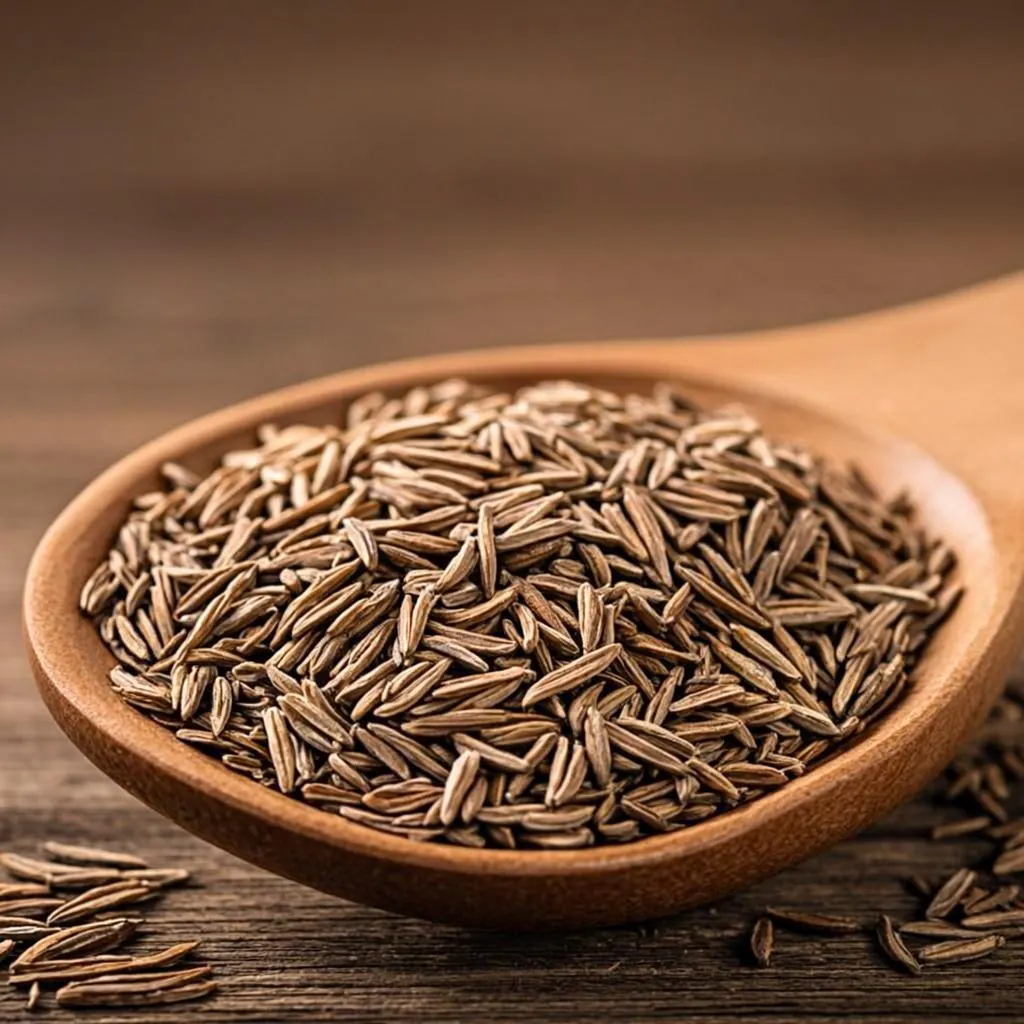
If you have bought Indian cumin more than once, you have probably had this experience. Two suppliers quote what looks like the same product. One is 4% cheaper. You take the cheaper one, and when the container lands the seed looks dustier, the aroma is flatter, and your production team tells you the yield on cleaning is worse than last time. Nothing on the invoice explains it, because the invoice just said "cumin seeds, good quality".
Cumin is graded, and it is graded quite precisely. The trouble is that most of the vocabulary comes from the trade rather than from a published standard, so it gets used loosely and sometimes deliberately vaguely. This article sets out what each term actually means, which numbers to put on your purchase order, and which of them your quality team should be checking on arrival.
Singapore quality and Europe quality: what the names really mean
These two names cause more confusion than anything else in the cumin trade. Neither is a legal standard. Neither has anything to do with where the cumin is going. They are historical trade grades that describe purity, meaning the percentage of the lot that is clean cumin seed, and admixture, meaning everything else.
Singapore quality is 99% purity and 1% admixture. Europe quality is 99.5% purity and 0.5% admixture. That is the whole difference. You can absolutely ship Singapore quality to Germany and Europe quality to Singapore, and plenty of people do.
The names stuck because those two destinations were the historically dominant buyers at those two purity levels, and the mills in Unjha and Rajkot have used the shorthand for decades. When a supplier tells you "Europe quality" they are telling you a number, not a destination.
| Grade name | Purity | Admixture | Typical process | Usually bought by |
|---|---|---|---|---|
| Machine cleaned 98/2 | 98% | 2% | Air screening and gravity separation | Grinding units, bulk industrial buyers |
| Singapore quality 99/1 | 99% | 1% | Machine cleaning plus a destoner | Repackers, spice blenders, Middle East and Asia trade |
| Europe quality 99.5/0.5 | 99.5% | 0.5% | Machine cleaning plus single-pass colour sorting | EU and UK importers, branded retail packers |
| Sortex 99.9 | 99.9% | 0.1% | Multi-pass optical sorting | Retail whole-spice packs, premium blends |
| Double sortex / hand picked | 99.95% and above | 0.05% | Multi-pass optical sorting plus manual inspection | Sample-driven retail programmes, Japan, high-spec food service |
One thing worth knowing: the jump in price from 99% to 99.5% is usually modest, while the jump from 99.5% to 99.9% is not. Optical sorting throws away cumin along with the rejects, so the yield loss is real and it shows up in your price. Buy the grade your process needs. If you are grinding the seed anyway, paying for double sortex is paying for something your grinder will destroy.
What counts as admixture
This matters, because "1% admixture" can mean very different things depending on what the 1% is made of. Ask your supplier to break it down. In practice admixture is some mix of:
- Stems and stalk pieces from threshing. Harmless but visible, and the main reason a lot looks scruffy.
- Other seeds, usually fennel, coriander or weed seed from adjacent fields.
- Dust and dirt, which is what pushes acid insoluble ash up.
- Stones and mud balls, which is what a destoner is for and what damages a grinder if it gets through.
- Light or immature berries, sometimes counted separately as "light berries" with its own tolerance.
A 1% admixture that is all stem is a cosmetic problem. A 0.5% admixture with stones in it is an equipment problem. Specify a separate maximum for foreign matter and for stones, not just a combined admixture figure.
Moisture: the number that decides whether the lot survives the voyage
Cumin should ship at 8% moisture or below. Many contracts write 10% maximum, which is generous and, if the cumin actually arrives at 10%, risky.
Two things go wrong above 9%. The first is mould, and with mould comes ochratoxin A, which is the mycotoxin the EU actually tests dried spices for. The second is a slow, quiet loss of aroma, because higher moisture and higher temperature together accelerate the loss of volatile oil. Cumin that sat at 10% moisture in a hot container for five weeks is not the cumin that was loaded.
There is also a commercial angle nobody mentions in the quote. Moisture is weight, and you pay for weight. Buying 14 MT at 10% moisture instead of 8% means you paid for roughly 280 kg of water. On a full container that is not a rounding error.
Volatile oil: the parameter that actually predicts flavour
Volatile oil, measured by steam distillation and reported as a percentage by volume, is the closest thing cumin has to a flavour score. Good Indian cumin runs 2.5% to 4.0%. Below 2.0% and your blend will taste thin no matter how clean the seed looks.
The dominant aroma compound is cuminaldehyde, and it is volatile in the ordinary sense of the word: it leaves. Volatile oil declines with age, with heat, with grinding and with time in an unsealed bag. This is why crop year matters and why a spec sheet without a volatile oil figure is not a spec sheet. If you are buying for a branded blend, put a minimum on it, ask for the figure on the certificate of analysis for the actual lot, and test it again on arrival if flavour consistency is what your customer pays you for.
One practical note on ground cumin. Volatile oil starts dropping the moment the seed is broken, so if you can grind at your end rather than buying cumin powder, you will get a fresher product. If you cannot, buy powder in nitrogen-flushed packaging and in quantities you will use within months, not years.
Ash, acid insoluble ash and what they tell you
Total ash is what is left after the sample is burned. For cumin it should be around 9.5% maximum. It reflects the mineral content of the seed itself plus whatever dirt came with it.
Acid insoluble ash is the more useful number. Typically specified at 1.5% maximum, and sometimes as low as 1.0%, it is essentially a measure of sand and silica. Cumin seed does not contain much of it naturally. A high acid insoluble ash figure means soil, and soil means the lot was threshed on bare ground or cleaned badly. It is the single best proxy for how carefully a lot was handled after harvest, and it is cheap to test.
Sterilisation: steam, and why ethylene oxide is a dead end for Europe
Whole spices carry a natural microbial load. Cumin grows close to the ground, is threshed in the open and sun dried, so total plate counts in the millions per gram are normal for unsterilised seed. If you are selling into retail or food service, or into any market with a Salmonella specification, the seed has to be treated.
You have two realistic options and one that will get your container rejected.
- Saturated steam sterilisation. The industry default now. Short, controlled exposure to steam under pressure, then rapid drying back to target moisture. Achieves a 3 to 5 log reduction and leaves no residue. It costs some volatile oil, usually 5% to 15% of it, which is the honest tradeoff nobody advertises. Ask for the before and after volatile oil figures.
- Steam plus a validated hold, or dry heat. Slower, gentler on aroma, lower throughput, higher cost.
- Ethylene oxide. Cheap, effective, and a commercial disaster for anything EU-bound. Do not accept it.
The problem with ethylene oxide is not just the gas. It converts to 2-chloroethanol in the product, that metabolite is stable, it stays there for a very long time, and EU enforcement counts the sum of ethylene oxide and 2-chloroethanol expressed as ethylene oxide against a limit set at the analytical limit of quantification. In practice that means any detection is a failure. Because the metabolite persists, a treated lot cannot be rehabilitated by airing it out or by blending. If a supplier is vague about how a lot was sterilised, that vagueness is the answer.
This also means you should ask about the facility, not only the lot. Ethylene oxide chambers cross-contaminate. A mill that runs both processes under one roof is a risk even for the lots it steamed.
The contaminant limits that actually apply to cumin
Here is a distinction that catches out a surprising number of buyers and suppliers. The EU aflatoxin limits for spices apply to a named list. Under Regulation (EU) 2023/915 that list is Capsicum species including chilli, cayenne and paprika, pepper of the Piper genus, nutmeg, turmeric, and mixtures of dried spices containing one or more of those. Dried ginger carries the same figures. Cumin is not on that list.
Ochratoxin A is a different story. Entry 1.2.17 of the same regulation covers "dried spices except products listed in 1.2.18" at 15 µg/kg, and states that the level applies also to mixtures of dried spices. Dried Capsicum fruits get 20 µg/kg under 1.2.18. So for cumin, ochratoxin A is the mycotoxin with a hard number attached to it.
| Contaminant | Applies to cumin? | Maximum level |
|---|---|---|
| Aflatoxin B1 and sum of B1, B2, G1, G2 | No. The spice entries name Capsicum, Piper, nutmeg, turmeric, ginger and mixtures containing them | 5.0 µg/kg B1 and 10.0 µg/kg total, for the named spices |
| Ochratoxin A | Yes, under "dried spices except products listed in 1.2.18" | 15 µg/kg |
| Pesticide residues | Yes, under the EU MRL regulation rather than 2023/915 | Substance by substance, with a default of 0.01 mg/kg where no MRL is set |
Two caveats worth stating plainly. First, if your cumin ends up in a spice blend that contains turmeric or pepper, the aflatoxin limits for mixtures come back into play, so a blender has a different problem from a whole-spice importer. Second, national authorities can and do sample for things beyond the harmonised list, and the annexes to these regulations are amended regularly. Read the current consolidated text rather than a table in a blog post, including this one.
Pesticide residues are the real rejection driver
If a cumin consignment from India is going to fail in Europe, residues are the most likely reason. Cumin is grown by a very large number of smallholders in Gujarat and Rajasthan, spraying practice varies, and the EU default MRL of 0.01 mg/kg for substances with no established limit is unforgiving. A product can be visually perfect, correctly sterilised, dry, aromatic, and still fail on a single molecule at a concentration you cannot see, smell or taste.
The only defence is testing before the container is booked, on the actual lot, at an ISO/IEC 17025 accredited laboratory, against a multi-residue panel scoped to your destination. A supplier who can hand you a lot-specific residue report from a named accredited lab is telling you something real about how they buy. A supplier who offers you a generic annual report is telling you something too.
If your consignment is EU-bound, it is worth understanding how border sampling actually works before you plan your timelines. We have written that up separately in how EU border controls work for Indian food shipments.
Crop year, origin and the seasonal rhythm you are buying into
Cumin in India is a rabi crop. It is sown from October to November and harvested from late February into March, with arrivals peaking in the Unjha market in Gujarat through March and April. Rajasthan follows a similar calendar.
What this means for you as a buyer is straightforward. Material bought between March and June is new crop, at its best on volatile oil, and usually at its most competitive because arrivals are heavy. Material bought in December and January is nine or ten months old, has been in a warehouse through a monsoon and a summer, and will test lower on volatile oil even when it is stored well. Neither is wrong. Just know which one you are buying, and put the crop year on the purchase order so there is no ambiguity.
Ask about storage too. Cumin held in a ventilated godown at ambient Gujarat temperatures loses aroma faster than cumin held cool. This is a fair question to ask, and the answer tells you whether you are dealing with a trader or a processor.
Packing, loading and what arrives at your end
Cumin is a light cargo. It runs roughly 500 to 550 kg per cubic metre in bags, so a 20ft container fills up on volume long before it hits its weight limit. Expect something in the region of 14 to 16 MT in a 20ft container in 25 kg bags depending on the bag type and stacking. If somebody quotes you 25 MT in a 20ft, they are quoting a commodity that is not cumin.
- 25 kg PP woven bags with an inner liner for most trade. The liner is not optional if your voyage crosses the Red Sea in summer.
- Multiwall paper bags for sterilised material going to retail packers, because they hold microbiological status better.
- Cartons for small retail units, palletised where the buyer can take pallets.
- Kraft paper lining of the container walls plus desiccant bags to control condensation. Cumin at 8% moisture in a container that sweats will arrive at more than 8%.
The loading arithmetic for every commodity we ship is set out in how many tonnes fit in a 20ft container, including why a 40ft does not carry twice the weight of a 20ft.
A short word on how we sell it
We process cumin at Gandhidham and we buy from the Gujarat and Rajasthan mandis. We will quote you 99/1 or 99.5/0.5 or sortex, and we will tell you which one we think your application actually needs, including when that is the cheaper one. We steam sterilise and we do not run ethylene oxide. Every lot ships with a certificate of analysis for that lot, not a template, and we retain a sealed counter-sample against the number on your purchase order.
If you want to compare a specification against something concrete, our whole cumin seed page carries the parameters we ship against, and you can ask for a sample and a quote with your own numbers on it.