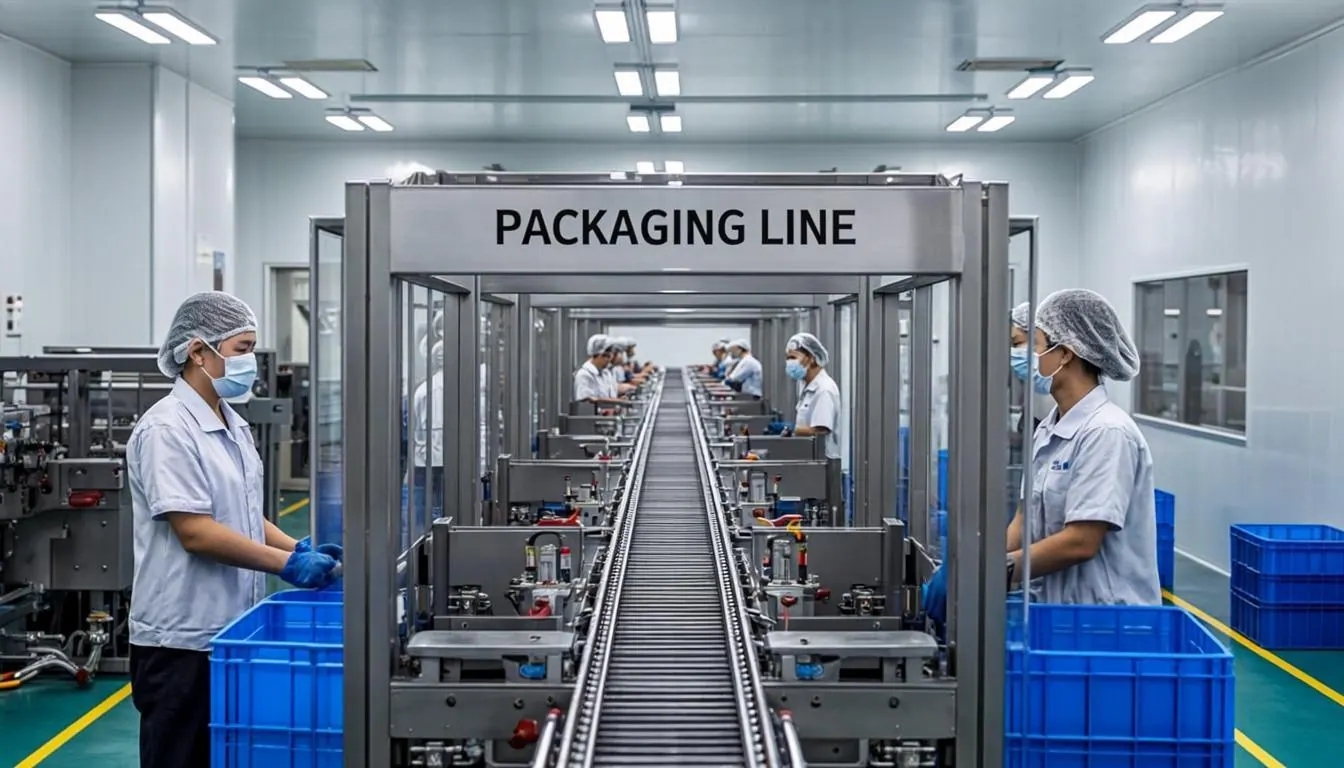
Packaging gets treated as procurement. It is quality control. The pack decides how much moisture moves in or out over five weeks at sea, whether light reaches a pigment that fades, whether an insect that survived treatment can get back in, and how much of a thin-coated pulse cracks in handling. None of that appears on the certificate of analysis, and all of it is what the buyer opens.
There is one principle worth putting before everything else, because it is the mistake that costs the most.
A liner does not dry anything
A sealed inner liner is an excellent moisture barrier, and that cuts both ways. It keeps humid outside air away from a dry product, and it keeps whatever moisture was in the product at packing exactly where it is.
So the sequence matters, and it is often run backwards. The correct order is: dry the lot to specification, verify the moisture, then seal it. The failure is: the lot is marginal on moisture, somebody decides a good liner will protect it, and the liner then prevents the equilibration that might have saved it. Worse, as the container cycles between warm days and cold nights across latitudes, the trapped moisture condenses on the inside of the liner and runs down onto the product. The result is caking, mould and, in a commodity where aflatoxin is a risk, the conditions for aflatoxin to increase during the voyage.
Which gives a rule that is simple to apply. A liner is insurance on a correct lot and an accelerant on a wet one. If a lot is above specification for moisture, the answer is drying, not better packaging. And it is why the moisture figure on the load-port certificate is the most load-bearing number in the whole packing decision, and why sampling for it properly matters, as covered in the pre-shipment inspection article.
The formats, and what each one is actually for
| Format | Typical sizes | What it is good at | Where it fails |
|---|---|---|---|
| PP woven, unlaminated | 25 kg, 50 kg | Cheap, strong, breathable, stackable | Poor moisture barrier, dust sifts through the weave |
| PP woven, laminated | 25 kg, 50 kg | Better moisture and dust barrier, cleaner appearance | Still not a sealed barrier, and slows fumigant penetration |
| PP woven with LDPE liner | 25 kg, 50 kg | Good moisture barrier for dry, hygroscopic products | Traps moisture if the product was packed damp |
| Jute | 25 kg, 50 kg | Breathable, strong, required by some destinations, renewable | Batching oil taint risk, poor moisture barrier, fibre shed |
| Multiwall paper | 10 kg to 25 kg | Clean presentation, printable, good for flours and powders | Weak when wet, poor handling tolerance |
| Bulk bag or FIBC | 500 kg, 1,000 kg | Fast handling, low packing cost per tonne | Handling damage on fragile seed, needs lifting equipment both ends |
| Vacuum or gas-flushed block | 5 kg to 25 kg | Excellent for high-value and fragile product, insect exclusion | Cost, and film puncture on sharp product |
| Retail pack | 250 g to 2 kg | Sells the product, carries the brand | Light exposure, and every defect is visible |
| Steel or HDPE drum | 200 kg net class | The default for oils and viscous products | Weight, cost, return logistics |
| Flexitank or ISO tank | 20,000 kg class | Lowest cost per tonne for bulk liquid | Previous-cargo history and cleanliness become critical |
Two rows deserve expansion because they are where Indian exporters most often have an avoidable problem.
Jute, and the batching oil question
Jute is a good packaging material and it is required or preferred by some destinations and some commodities. It also carries a specific, well-known contamination risk that is easy to prevent and easy to forget.
Jute fibre is softened during spinning with a batching oil. Traditionally that oil is a mineral hydrocarbon. Mineral hydrocarbon oil migrates from the bag into food in contact with it, and it does two things: it produces a kerosene-like taint that a buyer notices immediately, and it shows up analytically as mineral hydrocarbon contamination, which is a parameter under increasing scrutiny in European food safety work.
That is not a grey area legally. Packaging is a food contact material, and the general requirement for food contact materials is that they must be made under good manufacturing practice so that, in normal or foreseeable use, they do not transfer their constituents into food in quantities which could endanger human health, bring about an unacceptable change in the composition of the food, or bring about a deterioration in the organoleptic characteristics of it. A tainted pulse is a textbook failure of that third limb.
What to do about it, in order of usefulness:
- Specify food-grade batching oil, typically vegetable based, in the purchase order for the bags themselves.
- Get a written declaration from the bag supplier, per batch, and keep it. This is the document your buyer's auditor will ask for.
- Use an inner liner where the commodity is at all likely to pick up taint, which puts a barrier between the fibre and the food.
- Store bags separately from anything with a strong odour, because jute picks up smells and passes them on.
- Smell the bags before packing. It sounds unscientific and it catches problems that no certificate would have caught this month.
Note also that new bags and used bags are not the same product. Several destinations require new bags, some contracts specify it, and a phytosanitary additional declaration can require it. Reusing bags is a false economy in export, and it is one of the things a supervised stuffing inspection should verify.
PP woven, in the detail that matters
A PP bag is not a commodity. The specification that determines whether it survives the voyage has several lines, and buyers rarely see any of them.
| Parameter | Why it matters |
|---|---|
| Fabric weight, in grams per square metre | The single best proxy for strength and for burst resistance |
| Mesh, warp and weft count | Density of the weave, so dust retention and tear resistance |
| Lamination, BOPP or PP film | Moisture and dust barrier, print quality, and appearance on arrival |
| Inner liner material and thickness | The actual moisture barrier, where one is needed |
| UV stabilisation | Whether bags stored in daylight at either end go brittle |
| Stitching, single or double, and thread | Where a dropped bag actually fails |
| Crepe tape at the mouth | Prevents the stitch line tearing along the weave |
| Bottom seam construction | The second most common failure point after the mouth |
The point about lamination and liners slowing fumigant penetration is worth carrying forward into the shipping plan. Gas has to reach the insects, and a tightly stacked pallet of laminated bags with sealed liners is a much harder target than loose jute. So either treat the commodity before packing, or agree a longer exposure period with the fumigator. The phytosanitary and fumigation article covers why cutting the exposure period is the quiet failure that produces live insects on arrival.
Bag size is a workplace decision at the other end
This one surprises exporters who have only shipped within Asia. A 50 kg bag is a normal unit in Indian trade and an increasingly unacceptable one in several destination markets, because manual handling policies at the receiving warehouse effectively cap what a person is allowed to lift. Many European and North American importers have standardised on 25 kg for that reason alone.
It is not a quality preference and it is not something a good price will move, because it is coming from a health and safety policy rather than from a purchasing decision. Establish it early, because it changes real arithmetic:
- At 50 kg, a 25 tonne consignment is 500 bags. At 25 kg it is 1,000 bags.
- Twice the bags means roughly twice the packing labour and roughly twice the bag cost per tonne.
- It changes the stacking pattern, the pallet configuration and sometimes whether the container weighs out or cubes out.
Whether the change costs you payload depends on the commodity's density and the stacking pattern, and the way to work that out rather than guess is the break-even density method in the container loading guide.
Condensation in the container, and what actually helps
Container rain is a real phenomenon and it is a dew point problem, not a leak. Warm humid air sealed into a container at an Indian port cools when the vessel reaches higher latitudes, moisture condenses on the coldest surface, which is usually the steel roof and walls, and then drips.
What helps, roughly in order of effect:
- Correct product moisture. Everything else is secondary to this, and it is the only measure that addresses the source.
- Kraft paper lining on the walls and under the roof, which absorbs and spreads condensation instead of letting it drip in one place.
- Desiccant bags hung in the container, sized to the void volume and the voyage, which manage the air space rather than the product.
- Loading in the coolest part of the day where the operation allows it, which reduces the moisture sealed in.
- A dry container, verified by the six-sided inspection with a light test before loading.
What does not help is a sealed liner around wet product, for the reason set out at the top. And what actively hurts is loading a container that was itself wet, which is why the container inspection belongs inside the pre-shipment inspection rather than alongside it.
Markings, and the artwork approval nobody schedules
A marking error is a relabelling cost at the destination, and relabelling a thousand bags in a bonded warehouse is expensive out of all proportion to the mistake.
Two habits behind that list. Get the buyer's written approval of the artwork proof before printing, not after, and keep the approved proof on file. And put the production date on the pack, because it is the single parameter that predicts flavour and functional performance in milled products and it is routinely replaced by a best-before date that is calculated rather than observed. The argument for that, in the context of besan, is in the chana dal article.
The lot code line is the one that connects packaging to compliance. Traceability for food contact materials is defined as the ability to trace and follow a material through all stages of manufacture, processing and distribution, and the minimum expectation is that a business can identify who supplied a material and who it was supplied to. The same one-up, one-down logic applies to the food itself, and a bag with no batch code makes it impossible.
Bulk bags, and liquids
Bulk bags are the cheapest way to move a tonne and the most aggressive on fragile seed. Points to specify: the safe working load and the safety factor, which in ordinary practice is five to one for single-trip and six to one for multi-trip bags, a food-grade liner, whether the bag is single-trip or reusable, and the lifting arrangement at both ends. Thin-coated pulses, notably cowpea, crack more in bulk handling than in bags, which is a real cost rather than a theoretical one.
Liquids change the question entirely. For oils, the choice runs from drums through intermediate bulk containers to flexitanks and ISO tanks, and cost per tonne falls steeply as size rises. What rises with it is the importance of cleanliness history. For any tank or flexitank, ask for the previous three cargoes and the cleaning certificate, and refuse a unit whose history includes anything you would not want in your oil. For a food-grade oil this is not diligence theatre, it is the main contamination route. First-grade castor oil's specification, and why its parameters are written to be checkable, is in the FSG castor oil article.
Retail packs and the light problem
If your product goes to a retail shelf in a transparent film, the pack becomes a quality risk you cannot control after dispatch. Two consequences worth raising with the buyer rather than absorbing quietly.
Light fades pigment. A green pea, a red chilli powder and a turmeric powder will all lose colour on a brightly lit shelf, and the exporter usually gets blamed for a fade that happened after the sale. The dry peas article sets out how to handle bleaching contractually, and the same logic applies to any pigment.
And transparent film shows every defect. A cracked seed coat, a discoloured kernel, one dark speck in a pale flour. A lot that is perfectly acceptable in a 25 kg bag can be unacceptable in a 500 g window pack, which means a retail programme deserves a tighter specification and its own retained sample rather than the bulk specification in a smaller bag.
Sustainability, and the compliance trap inside it
Buyers now ask about recyclability, mono-material construction, recycled content and pack weight, and in some markets a packaging tax gives them a direct financial reason to care. Three honest points.
Mono-material construction genuinely helps recyclability, and a laminated PP bag with a PP film is easier to recycle than one combining different polymers. That is a real improvement you can make.
Recycled content in direct food contact is a compliance question, not a free win. Recycled polymer for food contact is subject to specific rules on the recycling process and the input stream, so a recycled-content claim needs documentation from the bag maker. Switching first and documenting later is the wrong order.
And jute is a genuine renewable advantage that comes with the batching oil obligation attached. Promoting the sustainability of jute packaging while shipping bags treated with mineral hydrocarbon oil is a position that will not survive a buyer's audit.
How we handle it
We fix moisture before we decide on packaging rather than using packaging to compensate for moisture, because the liner that looks like protection on a marginal lot is what causes the condensation. Jute bags are specified with food-grade batching oil and a written declaration per batch, bags are new rather than reused, and artwork is approved in writing by the buyer before printing. Bag size is agreed at quotation because it changes the packing cost and the loading plan, and for oils we provide the previous cargo history and cleaning certificate for any tank or flexitank rather than waiting to be asked.
The rest of the shipping chain is covered in the container loading guide, the pre-shipment inspection article and the export documentation guide.