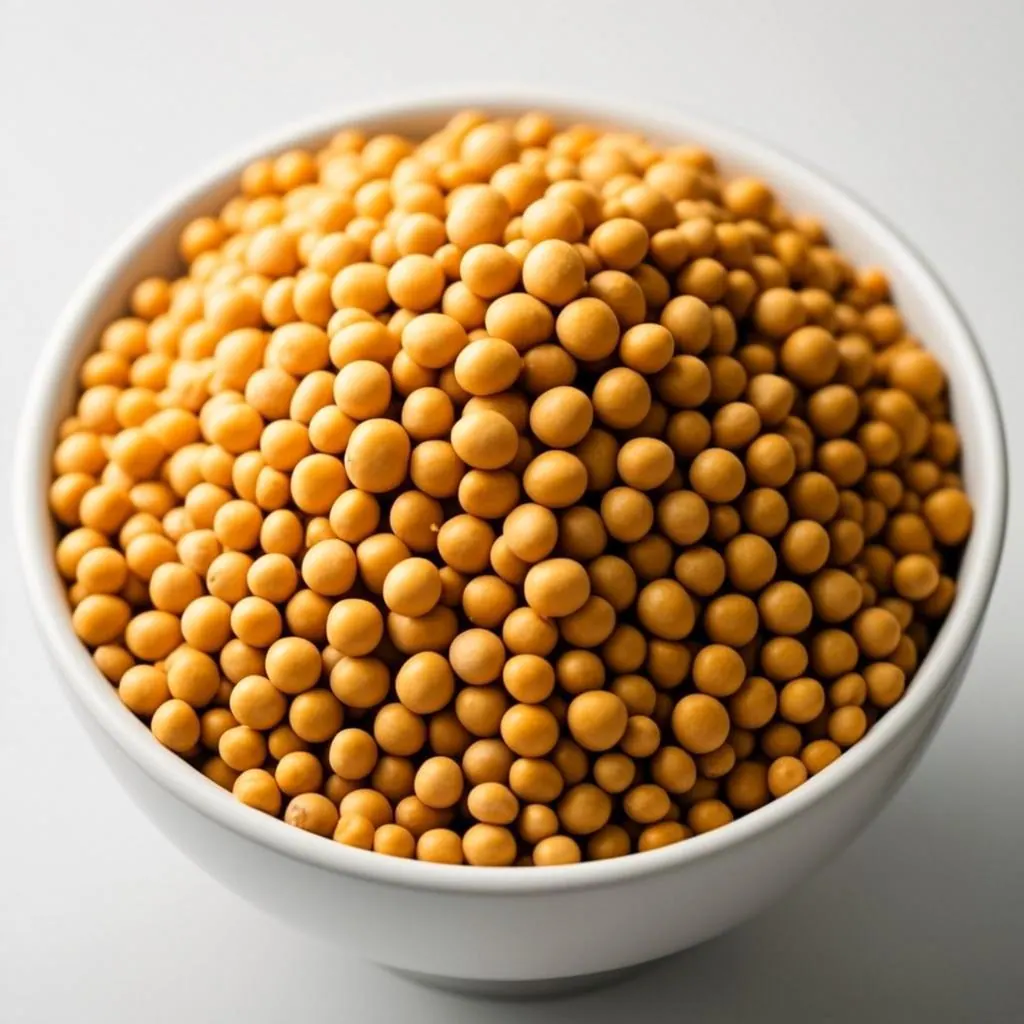
The first thing to settle in a chana dal enquiry is which chickpea it comes from, because the Indian chickpea trade runs on two different plants sold in two different ways. Desi chickpea is the smaller, angular, thicker-skinned type, usually brown to dark, and it is what becomes chana dal and besan. Kabuli chickpea is the large, round, cream-coloured type, sold whole and graded by count per hundred grams, and it is essentially a different market. The sizing systems do not translate, the prices do not track each other closely, and kabuli is not normally milled into dal.
If you are buying kabuli, the kabuli chickpea size and count guide is the relevant article. This one is about desi and what the mill does to it.
Milling yield, and why whole-pulse size affects your dal price
The desi chickpea has a thicker, more tightly bound seed coat than most pulses, which is why chana dal milling involves a pre-treatment step and why yields vary more between mills than in some other dals. The sequence is cleaning and grading, pre-treatment to loosen the husk, drying, dehusking, splitting, then grading and optional polishing.
Yield from whole desi chickpea to finished dal runs roughly 72 to 80 percent.
| Input | Output at 76% yield |
|---|---|
| 1,000 kg whole desi chickpea | 760 kg finished chana dal |
| Husk (chuni) | About 150 kg, sold as feed |
| Powder and fines | About 40 kg, into besan or feed streams |
| Brokens | About 50 kg, sold as a lower grade or ground |
Seed size drives that yield, and this is the part that connects the whole-pulse market to the dal price you pay. Larger, plumper desi seed dehusks more cleanly and splits into a higher proportion of whole, uniform splits rather than brokens and fines. Small, shrivelled seed does the opposite: more husk relative to cotyledon, more breakage, more powder. So a mill buying large desi seed can offer better dal at a defensible premium, and a suspiciously cheap chana dal offer is often a small-seed lot with the brokens still in it.
The practical question to ask a supplier is not "what is your yield" but "what seed size are you milling, and what is your whole-split percentage". The second number is the one you are buying.
The specification
| Parameter | Working range | Notes |
|---|---|---|
| Moisture | 10% to 12% maximum | The transit-critical line |
| Sound and whole splits | 97% to 99% minimum | The core measure. Ask for it as whole splits, not just "sound" |
| Broken and fragments | 1% to 3% maximum | Directly reflects seed size and mill setup |
| Husk and powder | 0.2% to 0.5% maximum | A readout of the aspiration and polishing steps |
| Foreign matter | 0.1% to 0.5% maximum | Stones, dust, extraneous seeds |
| Weevilled and insect damaged | 0.5% to 1% maximum | Bruchid damage, also a storage-history indicator |
| Damaged and discoloured | 1% to 2% maximum | Correlates with a wet harvest or poor drying |
| Admixture of other pulses | 0.5% maximum | Yellow pea splits are the substitution to watch |
| Polish | Stated by type | Unpolished, water, oil or powder |
| Colour | Against a retained sample | Golden yellow varies by crop. A sample is enforceable |
Yellow pea admixture deserves its own line. Split yellow peas and chana dal are similar in colour and size, yellow peas are usually considerably cheaper, and a blended lot is difficult to spot by eye at a glance. This is the most commonly reported substitution in the category. Two defences: an explicit admixture limit in the contract, and a sealed retained sample so a receiving inspector has something to compare against rather than a memory. The dry peas article covers the pea side, including why the price differential exists.
Colour is the other line worth thinking about. Chana dal's golden yellow shifts with crop, variety and growing region, and it is the attribute a retail buyer notices first. It cannot be contracted in words, so a sealed sample drawn from the approved pre-shipment material, one copy each side, is the only enforceable form.
Polish, and the disclosure question
Every Indian dal faces the same polish question and chana dal is no exception. The four routes are: nothing, water only, an added edible oil, or a powder or flour dusting. The consequences are worked through in detail in the toor dal article, and the summary is that oil polish means an added ingredient with a labelling consequence at your end, while a wheat-based dusting introduces a gluten and allergen question into a product many buyers assume is free of both.
For chana dal specifically, ask which oil. Groundnut oil would put a declared allergen into a chickpea product, and given that both commodities move through the same trading regions, it is a reasonable question rather than a paranoid one.
If your market values a short ingredient list, buy unpolished and accept the duller appearance. Just do not leave the line blank.
Besan, and what it inherits
Besan is ground chana dal. That single fact carries most of what you need to know about buying it, because a flour cannot be better than the dal it came from.
What besan inherits from the dal: colour, crop year, defect level, any admixture, any polish residue, and any pesticide or mycotoxin position. If the dal had yellow pea in it, the besan does. If the dal was old, the besan is.
What besan adds as its own specification:
| Parameter | What to specify | Why |
|---|---|---|
| Mesh or particle size | The mesh number and maximum oversize percentage | "Fine" is not a specification. Grinders differ, and applications differ |
| Moisture | Usually 8% to 10% maximum | Lower than the dal, because flour cakes and spoils faster |
| Production date | On every pack, not just a best-before | This is the parameter that predicts flavour |
| Ash content | Total ash, and acid insoluble ash | Acid insoluble ash catches soil and poor cleaning |
| Protein | If sold on a nutritional claim | Varies with variety and with how much husk carried through |
| Added starch or flour | Nil, stated explicitly | Dilution with cheaper flours is the known adulteration route |
The parameter that matters most in practice is the production date, and it is the one most often replaced by a best-before date that tells you nothing about age. Grinding exposes the fat fraction to oxygen, chickpea fat oxidises, and the resulting off flavour develops far faster in flour than in whole dal. A besan that is technically within its shelf life and four months old can taste stale in a way a customer will notice immediately in a delicate batter.
If your volume justifies it, the better economics are often to import dal and grind close to use. You get a longer usable life, you avoid paying freight on a product with a shorter clock, and you remove the easiest adulteration surface, because a flour can be diluted with cheaper flours in ways a split dal cannot.
Storage, insects and the sea leg
| Format | Sizes | Notes |
|---|---|---|
| PP woven bag, laminated | 25 kg, 50 kg | The default. Laminated on humid destinations |
| Jute bag | 25 kg, 50 kg | Required by some destinations. Declare food-grade batching oil |
| Bulk bag | 500 kg, 1,000 kg | Watch split damage in repeated handling |
| Retail pack | 500 g to 5 kg | Specify film, and for besan the light and moisture barrier |
| Besan, paper-lined | 25 kg, 50 kg | Flour needs a different pack from splits. Do not assume the same one |
Bruchid beetles are the routine insect issue in chickpea and they come with the crop rather than the container, so an infestation on arrival is a storage-history question at origin. Fumigation belongs in the shipping schedule rather than as an afterthought, and the documentary requirements are in the phytosanitary and fumigation article.
Besan is a different storage problem from dal: it cakes, it picks up odours, and it oxidises. Do not stow it with anything aromatic, and treat the moisture line as tighter than the dal's rather than the same.
Milled pulses load denser than the whole pulse of the same commodity, and besan denser again, so container payload behaviour differs between the three. Work it out with the break-even density method in the container loading guide rather than from a rule of thumb.
Classification and export policy
Whole desi chickpea, split dehusked chana dal and besan sit on different tariff lines, and Indian export policy conditions attach to the code rather than to the commercial description. Chickpea and pulse export policy in India has moved between free, restricted and prohibited repeatedly over the last two decades.
Check the current position for the specific ITC HS line against the DGFT schedule before contracting, and write in what happens if the position changes between order and shipment. The classification structure and the usual misclassifications are covered in the HS code article.
How we supply it
We ship desi chickpeas, black chickpeas and chana dal with the whole-split percentage stated rather than a general sound figure, the polish type named, and an explicit yellow pea admixture limit on the specification. Where besan is part of the order it carries a production date on every pack and a mesh specification with a maximum oversize.
The other milled pulses are covered separately: toor dal, urad and black gram and moong and green gram. If your interest is the large cream-coloured chickpea rather than the milling type, start with the kabuli size and count guide.