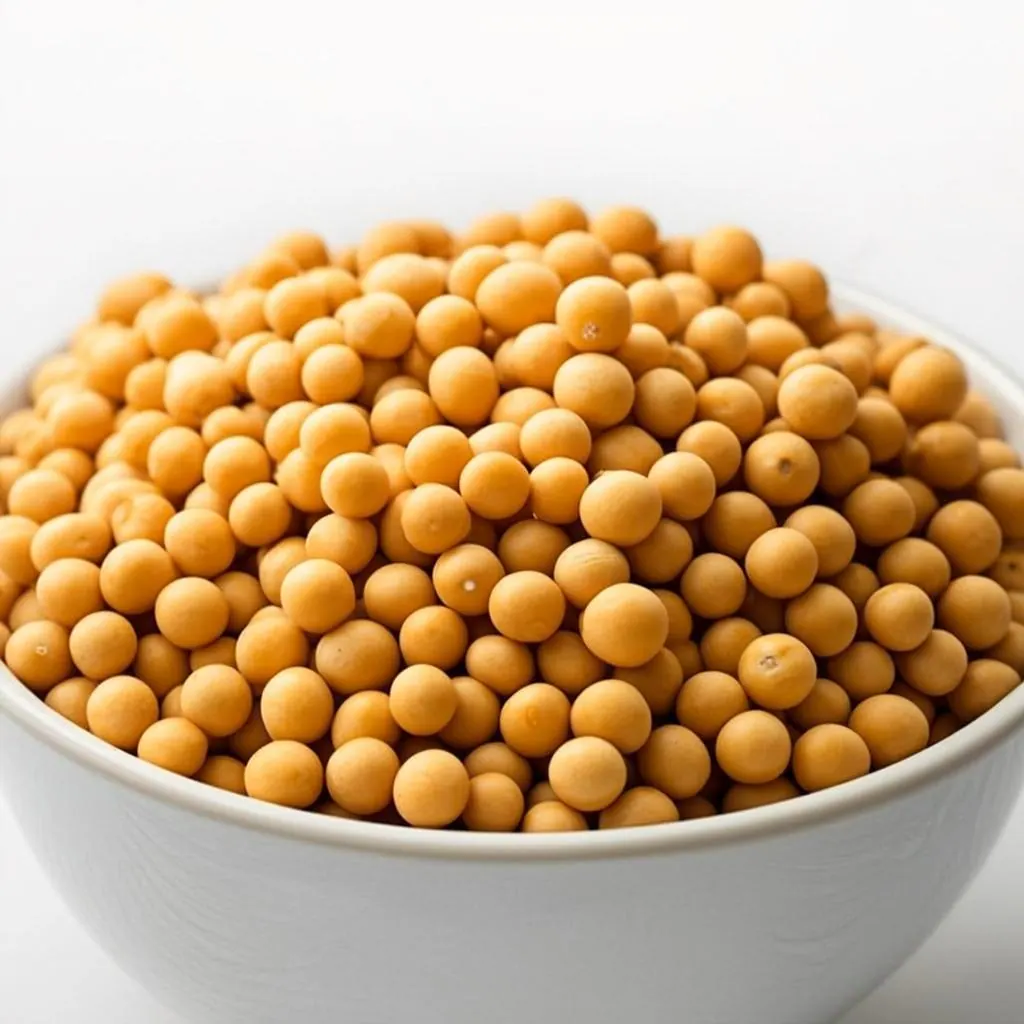
Toor dal is dehusked split pigeon pea, and the word that matters in that sentence is "milled". A whole pulse is a cleaned agricultural commodity. A dal is a manufactured product, and the mill decides colour, broken percentage, cooking behaviour, polish and shelf life. Sorting afterwards can remove defects but it cannot undo a bad mill run, which is why a toor dal specification should describe the process as well as the outcome.
The single line most often left blank is polish, and it is the line most often regretted, because oil polish means an edible oil has been added to the surface of a food and that has consequences at your end rather than at the mill's.
What milling actually does, and why yield matters
The sequence is roughly: cleaning and grading, a pre-treatment to loosen the husk from the cotyledon, drying, dehusking against abrasive rollers, splitting, then grading and polishing. The pre-treatment is where mills differ most, some using water conditioning and some using an oil and water treatment, and it is the step that decides how cleanly the husk releases. A poor release means the roller has to work harder, and a roller working harder produces brokens and powder.
Milling yield from whole pigeon pea to finished dal runs roughly 68 to 75 percent. That figure is the reason a dal price and a whole pulse price cannot be compared directly.
| Input | Output at 72% yield |
|---|---|
| 1,000 kg whole pigeon pea | 720 kg finished dal |
| Husk and powder | About 190 kg |
| Brokens and small fragments | About 90 kg, sold as a separate lower-value grade |
So a tonne of dal starts from about 1.39 tonnes of whole pulse. If you are choosing between importing whole pigeon pea and milling locally, or importing finished dal, that is the multiplier to apply before you compare anything, along with the fact that the by-products have local value at the mill and probably none at your site.
Polish, in plain terms
| Polish type | What is applied | Appearance | Declaration consequence |
|---|---|---|---|
| Unpolished | Nothing | Matte, natural variation visible | None. The cleanest ingredient statement |
| Water polished | Water only, then dried | Slightly brighter, uniform | None, but check the drying step and final moisture |
| Oil polished | An edible oil, commonly a small dosage | Glossy, uniform, richer colour | The oil is an added ingredient. Declarable in most markets |
| Powder or maida polished | A starch or flour dusting | Bright, opaque finish | Declarable, and an allergen question if wheat based |
The two things to establish for an oil polished lot are which oil and at what dosage. Which oil, because it becomes an ingredient in your product and because some oils are allergens: groundnut oil in particular would put a declared allergen into a pulse. And the dosage, because it is weight you are buying at dal prices and because a heavy application can go rancid, which is how a dal lot develops an off odour with nothing else wrong with it.
Powder or flour polishing deserves a harder look. If the dusting is wheat based it introduces a gluten and allergen issue into a product buyers often assume is naturally free of both. Ask explicitly rather than assuming it is not done.
If your market values a short ingredient list, buy unpolished and accept the duller appearance. If your market buys on shelf gloss, buy oil polished with the oil named and the dosage stated. What you should not do is leave the line blank, because the mill will then choose, and it will choose the one that sells best in India.
The specification, line by line
| Parameter | Working range | Why it matters |
|---|---|---|
| Moisture | 10% to 12% maximum | Mould and insect risk in transit. The single most important line |
| Sound and whole splits | 97% to 99% minimum | The core quality measure for a milled dal |
| Broken and fragments | 1% to 3% maximum | Cooks unevenly, and turns to paste before the sound splits are done |
| Husk and powder | 0.2% to 0.5% maximum | A direct readout of the polishing and aspiration steps |
| Foreign matter | 0.1% to 0.5% maximum | Stones, dust, extraneous seeds |
| Weevilled and insect damaged | 0.5% to 1% maximum | Also a storage-history indicator |
| Damaged and discoloured | 1% to 2% maximum | Correlates with poor drying or a wet harvest |
| Admixture of other pulses | 0.5% maximum | Cooking times differ, so admixture shows up in the pot |
| Polish | Stated by type | See above |
| Colour | Against a retained sample | "Yellow" is not enforceable. A sealed sample is |
Two of these deserve emphasis. Moisture is not about weight, it is about the twenty-day warm sea leg during which any available water supports mould and insect activity. A dal loaded at 13.5 percent is a dal that may arrive with a problem no dispatch certificate anticipated. And colour cannot be contracted in words. A sealed retained sample, one copy each side, resolves more disputes on milled pulses than any adjective, because natural variation between crops is real and a specification has to allow for it while still being enforceable.
Cooking behaviour, and the parameter nobody contracts
The thing your customer actually notices is cooking time and whether the dal holds shape or collapses. Neither appears on a standard specification, and both are predictable from things that do.
- Crop year. Older pulses develop a hard-to-cook character. The mechanism is the same one described in the kabuli chickpea guide, and the response is the same: ask for the crop year on the certificate of analysis and treat its absence as a question.
- Broken percentage. Brokens hydrate faster and disintegrate first, so a high-broken lot gives you a cloudy, uneven result even though every split in it is sound.
- Moisture history. A dal that has been wetted and re-dried, whether in polishing or in storage, cooks differently from one that has not.
- Size uniformity. Mixed split sizes cook unevenly for the same reason mixed kernel sizes roast unevenly.
If cooking performance matters commercially, the useful addition to a contract is a cook trial on the approved sample: an agreed method, an agreed time, and a recorded outcome held with the retained sample. It costs almost nothing and it converts a subjective complaint into a measurable one.
Lemon, red and the variety question
You will meet trade descriptions such as lemon toor and red toor. They describe the cotyledon colour, which is varietal and origin-linked, and they are useful shorthand rather than published grades. Lighter, more uniform colour tends to command a premium in markets where the dal is visible in the finished dish.
Treat these names the way the makhana article treats suta numbers: a widely used trade convention with no published standard behind it, so two suppliers can both use the term honestly for different material. Pin it down with a retained sample and the origin.
The export policy point, stated honestly
India is both the world's largest producer of pigeon pea and a substantial importer of it, and Indian export policy on pulses has changed repeatedly over the last two decades, moving between free, restricted and prohibited for different pulses at different times, sometimes with short notice.
That is a real commercial risk in a forward contract, and the honest advice is procedural rather than substantive: before contracting, check the current policy condition for the specific ITC HS line against the DGFT schedule, and write into the contract what happens if policy changes between order and shipment. A supplier who tells you the position is permanently settled is either not following it or not telling you.
The HS classification itself matters here too, because the policy condition attaches to the code rather than to the description you use in an email. Whole pigeon pea and split dehusked dal are different lines. The HS code article sets out how the pulse lines are structured and where the common misclassifications happen.
Packing, storage and loading
| Format | Sizes | Notes |
|---|---|---|
| PP woven bag, laminated | 25 kg, 50 kg | The standard. Laminated resists moisture ingress better |
| Jute bag | 25 kg, 50 kg | Breathable, required by some destinations, needs a food-grade batching oil declaration |
| Bulk bag | 500 kg, 1,000 kg | For onward repacking. Watch handling damage to splits |
| Retail pack | 500 g to 5 kg | Specify film specification and whether nitrogen flushing is included |
Milled pulses load heavier than whole pulses of the same commodity because the husk has gone, so a container reaches its payload limit on volume you might not expect. Work it through with the break-even density method in the container loading guide rather than assuming a figure.
Insects are the practical storage risk more than mould, because bruchid beetles arrive with the crop rather than in the container. Fumigation timing therefore belongs in the shipping schedule rather than being treated as an afterthought, and the documentary side of it, including what the phytosanitary certificate has to say, is covered in the phytosanitary and fumigation article.
How we supply it
We ship toor dal with the polish type stated on the specification rather than assumed, the oil named where oil polish is used, and moisture tested at load rather than at mill dispatch. Crop year goes on the certificate of analysis, and a sealed retained sample travels with any order where colour is commercially sensitive.
The other milled pulses follow the same logic with their own functional parameters: chana dal, urad and black gram and moong and green gram.